
The Basement, the Shoe Pile, and the Audacity to Be Grateful
Some thoughts on borrowed square footage, aggressively average coffee, motherhood, and refusing to inherit resentment.
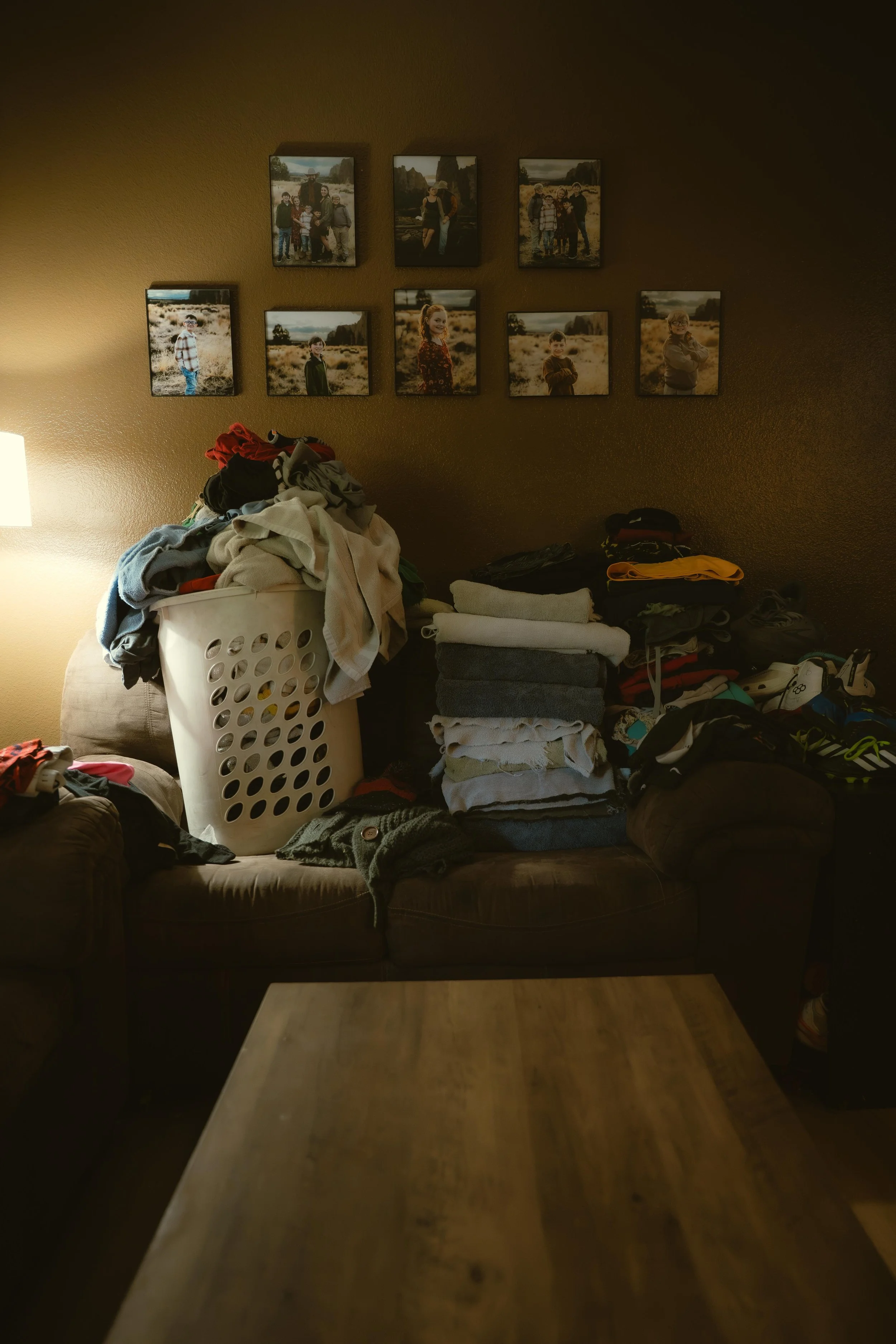
This morning, I found myself looking at an overflowing laundry basket sitting directly beneath a wall of family photographs. In the photographs, everyone is clean, dressed, and facing roughly the same direction. Beneath them, a small textile emergency has spread across the couch. There are towels, sweatshirts, children’s clothes, and several socks that may or may not have living relatives elsewhere in the room.
The contrast made me laugh because it was a fairly accurate portrait of family life. There is the version we frame, print, and hang on the wall, and then there is everything happening three feet below it.
As a photographer, I spend a great deal of time arranging the visible pieces of people’s lives. I pay attention to light, move objects out of the frame, straighten clothing, and wait for the half-second when everyone looks peaceful. I understand why we preserve those moments. The photographs are real, even if they do not include the argument that happened in the car or the child who announced five minutes earlier that his pants felt strange.
The laundry is real too.
For most of my life, I assumed the unphotographed parts were evidence that something had gone wrong. I am starting to understand that the mess may be the most honest proof that something is going right.
What I learned to want
I spent much of my adolescence and young adulthood watching my mother study what other women had. Their houses were nicer. Their cars were newer. Their vacations were better. Their lives seemed to exist as a running inventory of everything ours was missing.
She often expressed her dissatisfaction as criticism. The house was not actually that nice. The car was probably financed. The vacation was excessive. Still, beneath the criticism was an obvious longing for the same things, along with a growing resentment that other women appeared to have received a version of adulthood that had somehow passed her by.
My father did not seem especially concerned with what anyone else owned. He was absorbed by the family business he had taken over from his parents, a purchase he later admitted frightened him because of the lack of transparency surrounding it. One parent was preoccupied with the life everyone else seemed to have, while the other had little emotional energy left after work. It was, as the professionals might say, not an especially relaxing atmosphere.
The lesson I absorbed was that home was something you earned once your life finally looked respectable. It had enough bedrooms, matching furniture, a clean kitchen, and no visible evidence that anyone had ever rushed out the door searching for a missing shoe. Home belonged to people who had made better decisions, earned more money, or understood some basic rule of adulthood that had not been explained to the rest of us.
I also learned that dissatisfaction could become a personality. You could become so focused on the house you did not have that you failed to notice the people waiting for you inside the one you did.
That is the part I am trying hardest not to repeat.
My own path into adulthood was not exactly a study in patient decision-making. I finished a substantial college athletic career and moved into the rest of my life with plenty of discipline, a bachelor’s degree, and very little understanding of how to create stability outside of a training schedule.
Over the next decade, I accumulated failed marriages, two children I now share with a man who moved to another state, and an impressive ability to make major life decisions while operating almost entirely on adrenaline. I had spent so much of my younger life wanting to escape that I became skilled at leaving without necessarily knowing where I was going.
Survival looked productive from the outside. I worked, parented, kept moving, and became very good at making my life appear far more organized than it was. I could create the impression that I had everything under control while privately wondering what I was doing, why I kept finding myself in familiar forms of chaos, and why the things I had tried so hard to escape kept reappearing with different names and slightly altered packaging.
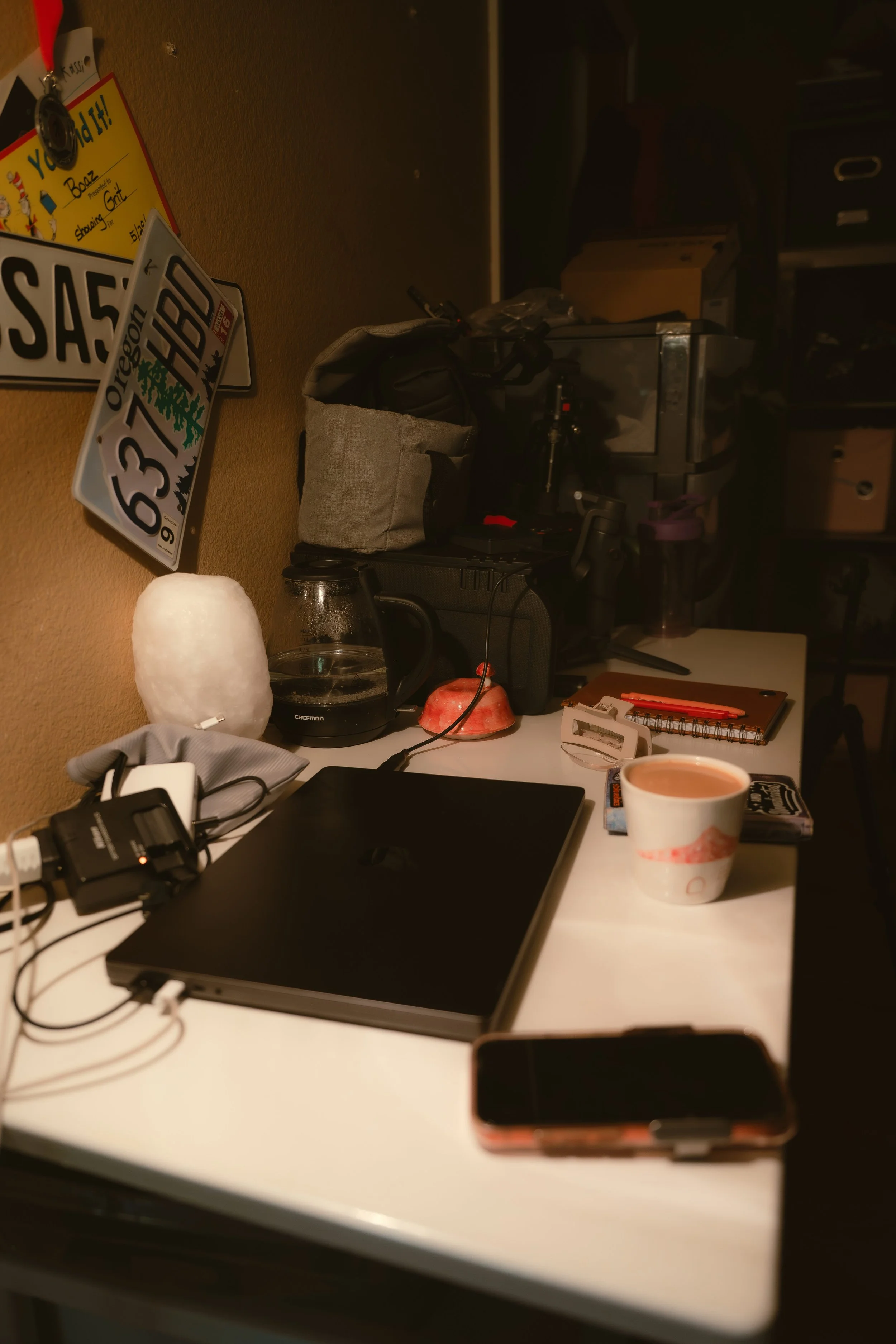
My desk still carries traces of that life. It holds my computer, photography equipment, notebooks, chargers, camera batteries, coffee, and an unreasonable number of cords. It is where I edit photographs, answer emails, organize wrestling information, review family schedules, and search for something I was certain I placed directly beside the laptop.
A cleaner desk might be more visually soothing, but this one tells the truth. My work does not occur in a quiet studio separate from the rest of my responsibilities. It happens in the middle of them.
The slow route out of rock bottom
I met Travis in 2021 while I was firmly in the trenches of rock bottom. I was a newly single mother with a degree I was not using, very little experience in a clearly defined career field, and no practical way to afford the childcare that would allow me to become employed enough to pay for childcare.
On paper, I was employable. In practice, the math was not mathing.
I also had no idea how to navigate the assistance systems that supposedly existed for people in exactly my position. I needed help, did not know how to find it, and had inherited a deep conviction that needing anything was something to conceal. I spent a remarkable amount of energy covering the instability rather than admitting how unstable everything felt.
Travis loved me slowly and gently. He did it so quietly that, for a while, I was unsure whether he even liked me. I had confused intensity with connection for most of my adult life, so consistency initially seemed suspicious. There was no immediate emotional explosion, no dramatic declaration, and no attempt to rush me into becoming something useful to him.
We spent the next several years building a relationship while carrying the residue of our previous ones. He came from his own traumatic background, although the family surrounding him now is almost absurdly kind. They are generous without turning generosity into a debt. They help without making the person receiving the help feel small. They have shown me that family support does not have to come with surveillance, resentment, or a future invoice.
His relationship experience before me was less heartwarming. Mine was also not suitable for instructional purposes.
Something changed for us in April 2025. We stopped approaching our relationship as though one of us might eventually discover the emergency exit. We committed to the actual work of trusting each other, believing in each other, and building something that did not depend on either person remaining afraid.
Five years after we met, we finally got married.
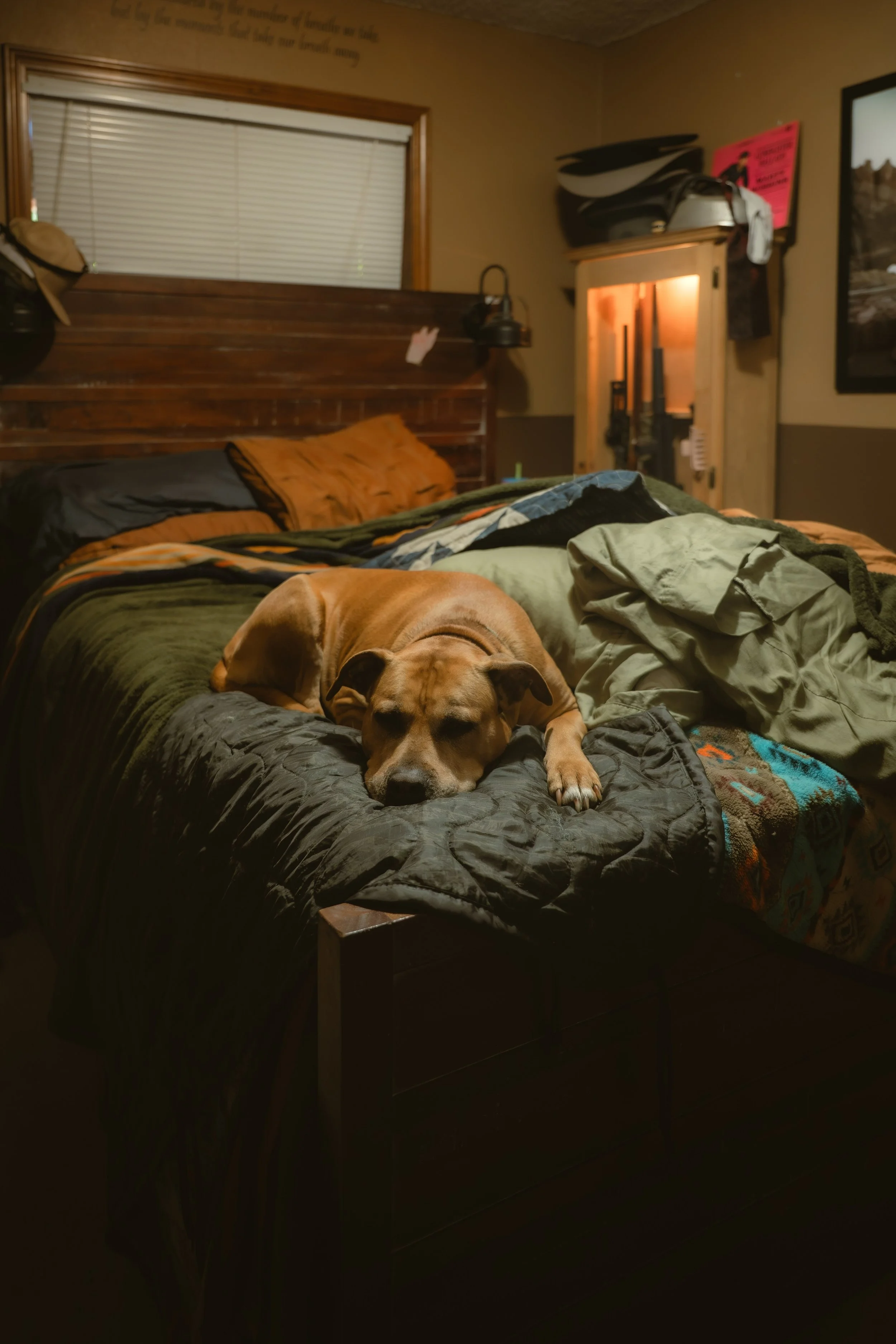
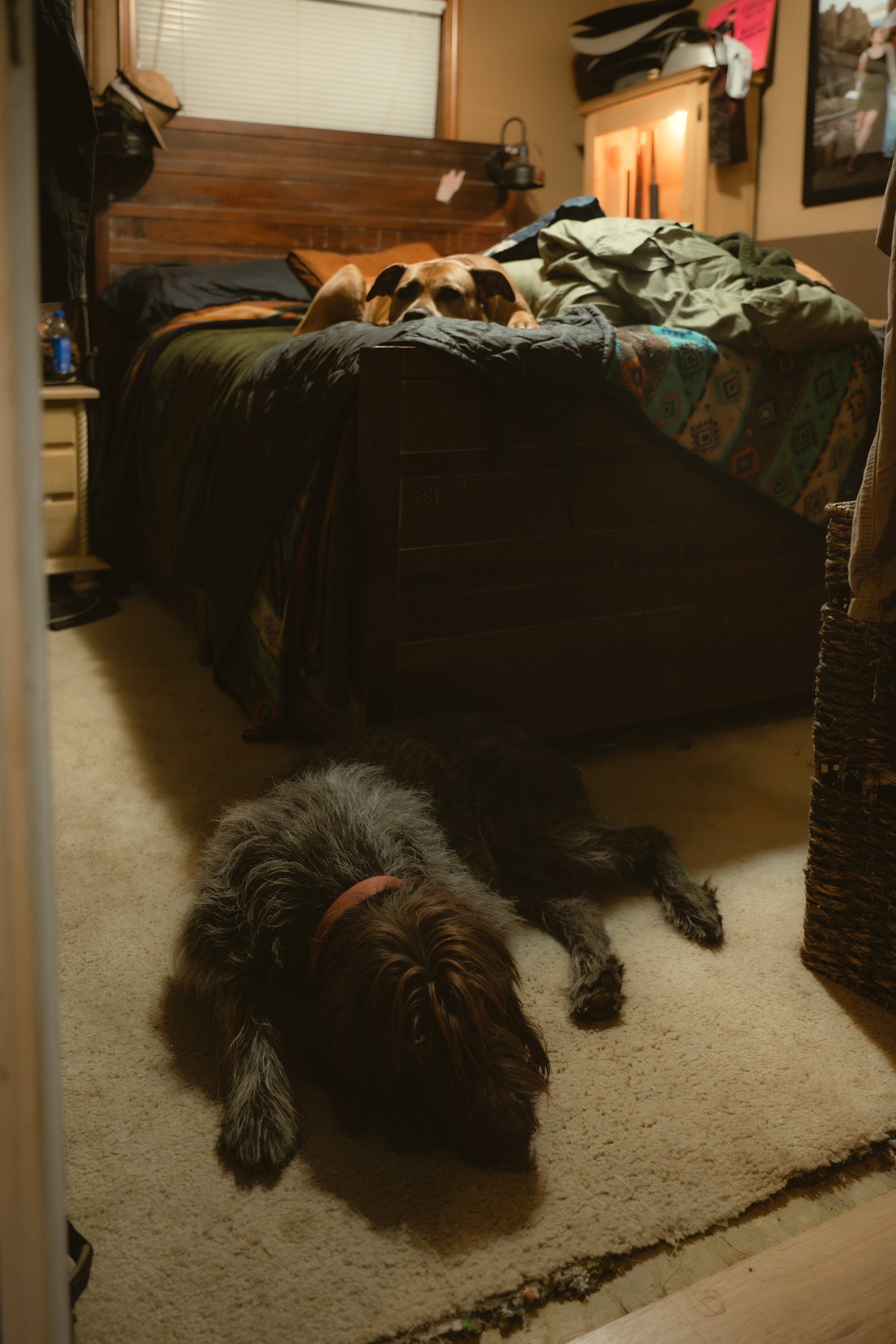
Our bedroom is crowded, rarely staged, and largely governed by two dogs who appear to believe our bed is part of their compensation package. Clothing sometimes occupies the furniture. The blankets are seldom arranged properly. One dog sleeps as though she has worked a physically demanding twelve-hour shift, while the other lies on the floor looking emotionally devastated by circumstances no one can identify.
There was a time when I would have believed peace required a prettier room. I would have wanted matching furniture, more storage, a carefully made bed, and enough floor space to walk without negotiating around a dog. I would still gladly accept the storage. Personal growth has not made me opposed to closets.
What has changed is my belief that the beautiful part of life must wait until the room becomes more beautiful. We sleep here after long days. We talk here. We make plans, argue, reconcile, laugh, and occasionally attempt to hide from the children here, although closing a door does not prevent anyone from asking questions through it.
The room is small, but the life inside it is not.
Our highly sophisticated basement kitchen
In November 2025, I left my parents’ house after living there since March. The departure happened during a desperate and angry night that eventually became part of a much larger series of events. By the end of it, I had decided to have no contact with my parents.
That decision had been forming for a long time.
Travis and I moved into his parents’ basement while we adjusted to his new career, the long hours that came with it, and the practical work of figuring out what came next. Our living space includes one bedroom, a living room area, and a separate corner with bunk beds for the kids.
We do not have a kitchen of our own downstairs, so we created something close enough to keep everyone caffeinated and moderately functional.
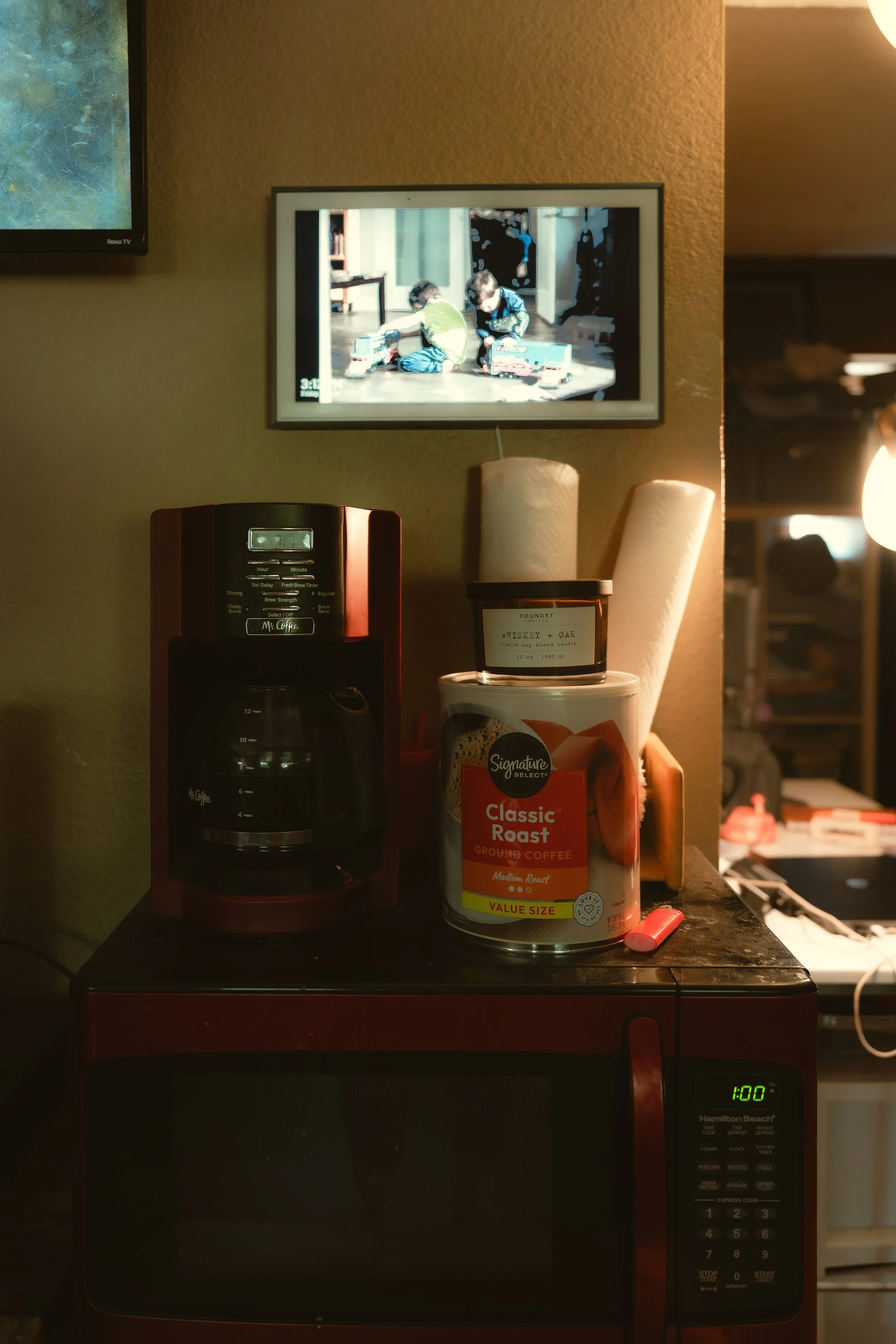
Our morning station consists of a microwave, a coffee pot, a large container of aggressively average coffee, and a small collection of supplies arranged on whatever surface was available. It is not an elegant kitchenette, but every morning begins there.
Above it hangs the Skylight calendar my husband and best friend chose together as my Christmas present. When it is idle, it cycles through photographs of the kids. The rest of the time, it attempts to maintain order across school events, practices, appointments, custody exchanges, work schedules, and the movements of five children who are almost never expected in the same place at the same time.
It is basically family air-traffic control mounted above a microwave.
I love that Travis and my best friend chose it for me because the gift showed that they understood the actual shape of my life. They did not give me something intended for display in a future house. They gave me something that helps carry the life already happening here.
There is a particular kind of love in being given something useful by people who understand what is taking up space in your brain.
Every morning, the coffee brews while the calendar tells us where everyone needs to be. A photograph of one of the children appears on the screen. Someone cannot find a water bottle. A schedule has changed. A child needs something signed. I forget my coffee, reheat it, forget it again, and eventually drink it at a temperature nature did not intend.
The arrangement is makeshift, but the ritual is ours. Human beings apparently need very little to establish a kitchen: one electrical outlet, a flat surface, and a sufficient level of denial about how long the coffee has been sitting there.
Borrowed space is still space
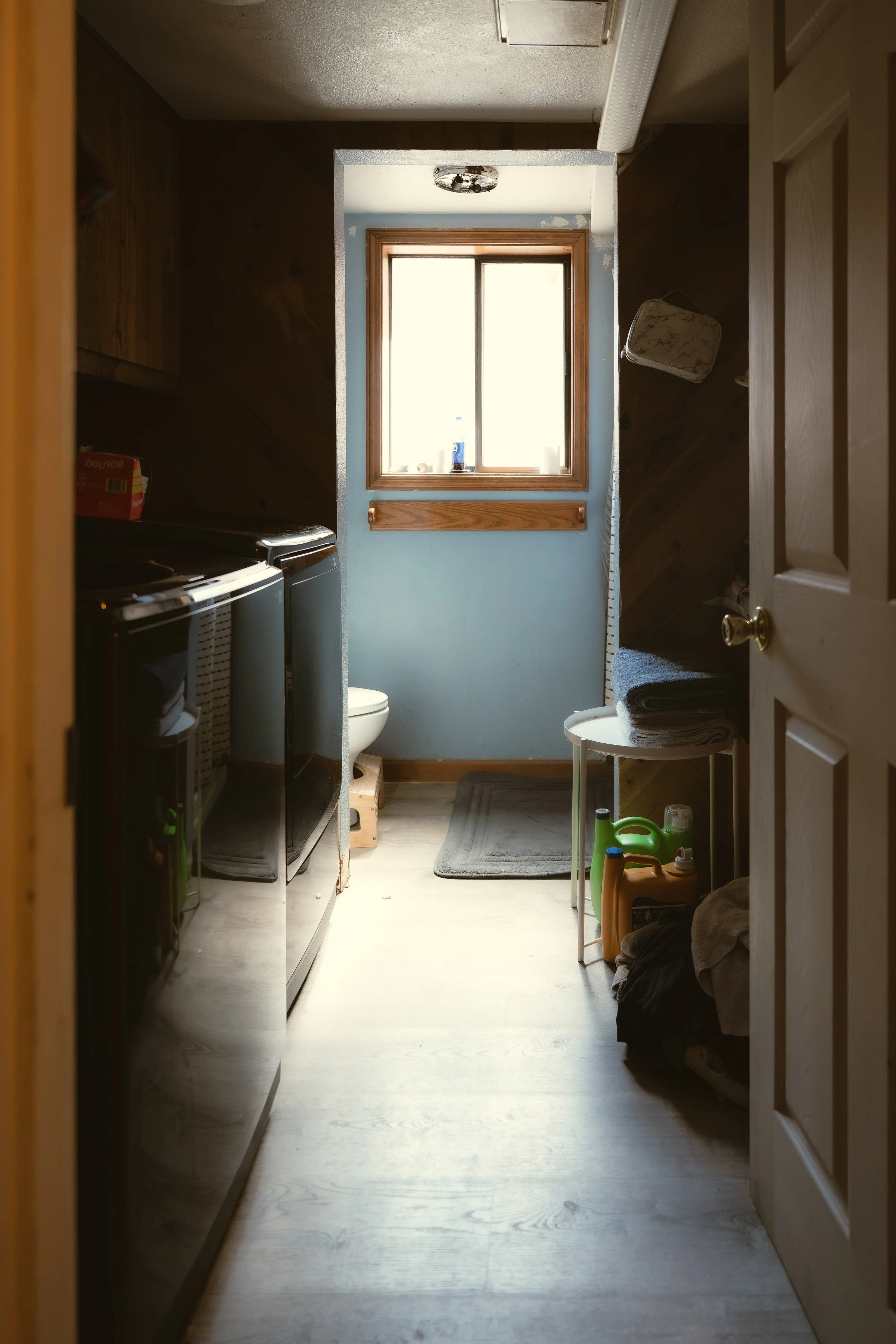
The bathroom also functions as the laundry room, storage area, and occasional site of negotiations concerning which household need is most urgent. Detergent sits within reach. Towels occupy a small table. The toilet appears to have received a modest height adjustment through the strategic use of lumber.
This is not the home I imagined having at this point in my life. It is also not a failure.
Living with family is difficult. I know now, from experience, that multiple households sharing one structure creates complications. Privacy becomes less of an architectural feature and more of a scheduling decision. Your belongings collect in borrowed corners. You adapt to routines you did not design.
The difference between my experience and the one I watched growing up is that I am grateful for this place. I do not have to pretend it is easy in order to recognize what it has given us.
This basement has given us stability while Travis establishes himself in a demanding career. It has given us room to make plans without rushing into another bad decision simply because I am embarrassed by where we are. It has given the children somewhere safe to sleep and given us the opportunity to work toward a home of our own.
I still want that home. I want a real kitchen counter. I want bedrooms for the children and enough storage that putting something away does not resemble a spatial-reasoning exam. I would enjoy opening a closet without first preparing for impact.
Wanting those things does not require me to hate what we have now.
That may seem obvious, but it was not obvious to me for a long time. I grew up believing that ambition required dissatisfaction and that gratitude meant surrendering the right to hope for anything better. I now think it is possible to work toward a different future without treating the present as an insult.
The children are gone, but their things are everywhere
My two youngest children are currently with their father for his half of the summer. The house is noticeably quieter. There are fewer arguments, fewer urgent updates about what someone else has done, and significantly fewer requests for snacks from people who denied being hungry ten minutes earlier.
The extra quiet gives my brain room to wander into the archives, which is not always a supervised activity.
This morning, I looked around at the clutter that normally overwhelms me. With the children gone, I could see it without also watching them actively create more of it. Everywhere I looked, the room was telling me that my children live here.
They do not merely visit a tidy adult home and return their belongings to a designated basket when they leave. They occupy it. Their shoes are mixed with ours. Their books are stacked under the table. Their bikes fill the garage. Their art appears in unexpected places, and their schedules govern a digital command center above the coffee pot.
For years, I would have seen that as evidence that I needed a better system.
Now I also see it as evidence that they belong.
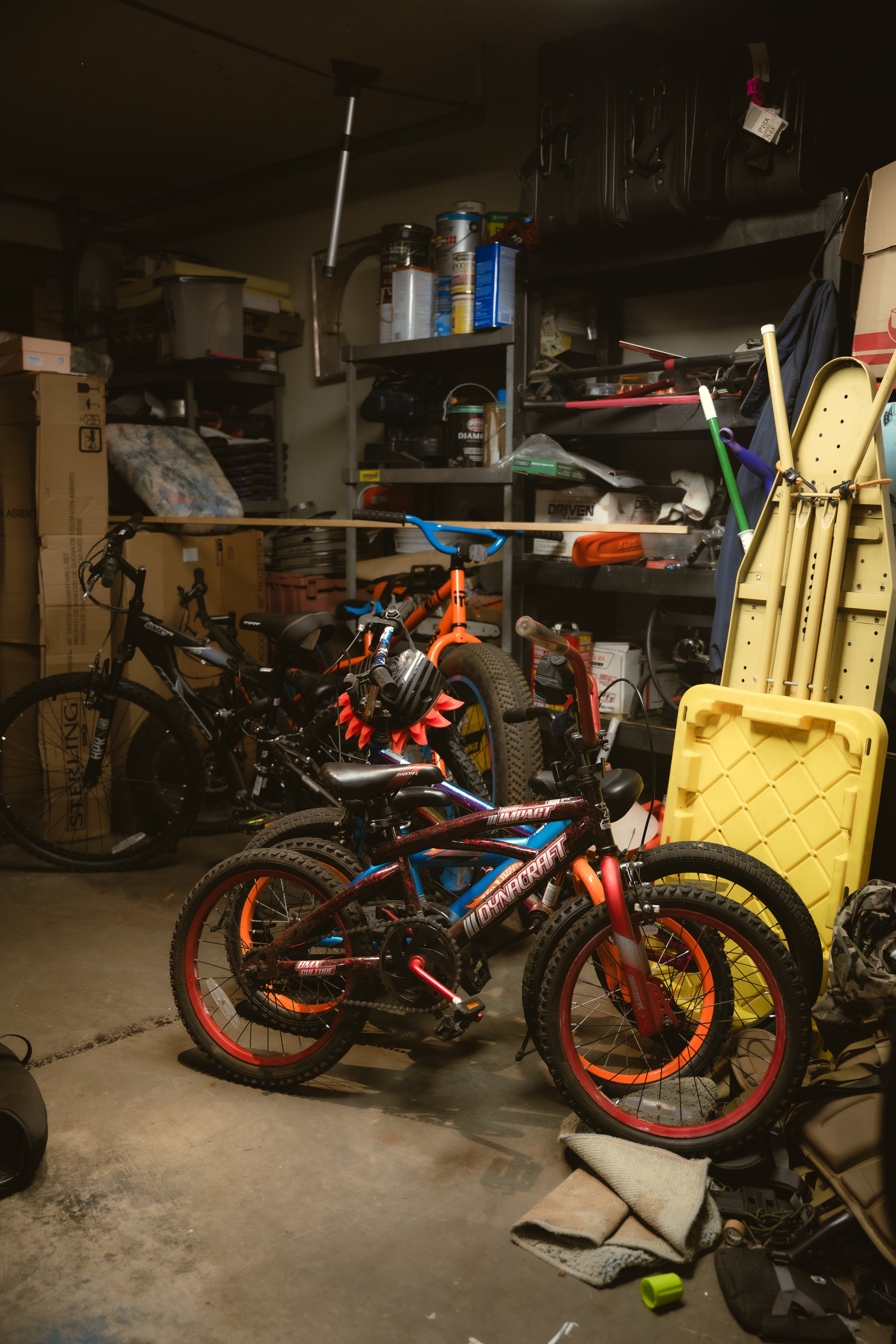
The garage contains a small fleet of bicycles in several sizes, helmets, toys, boxes, luggage, and enough family equipment to support multiple sports and at least one poorly planned expedition. The bikes occupy too much space, but they are also waiting for children who will soon outgrow them.
That is the rude thing about childhood. The phases that consume your entire house eventually disappear.
The shoes stop fitting. The bicycles become too small. The books are outgrown. The child who cannot find a shoe sitting directly in front of him eventually becomes a person who leaves the house in shoes he bought without consulting you.
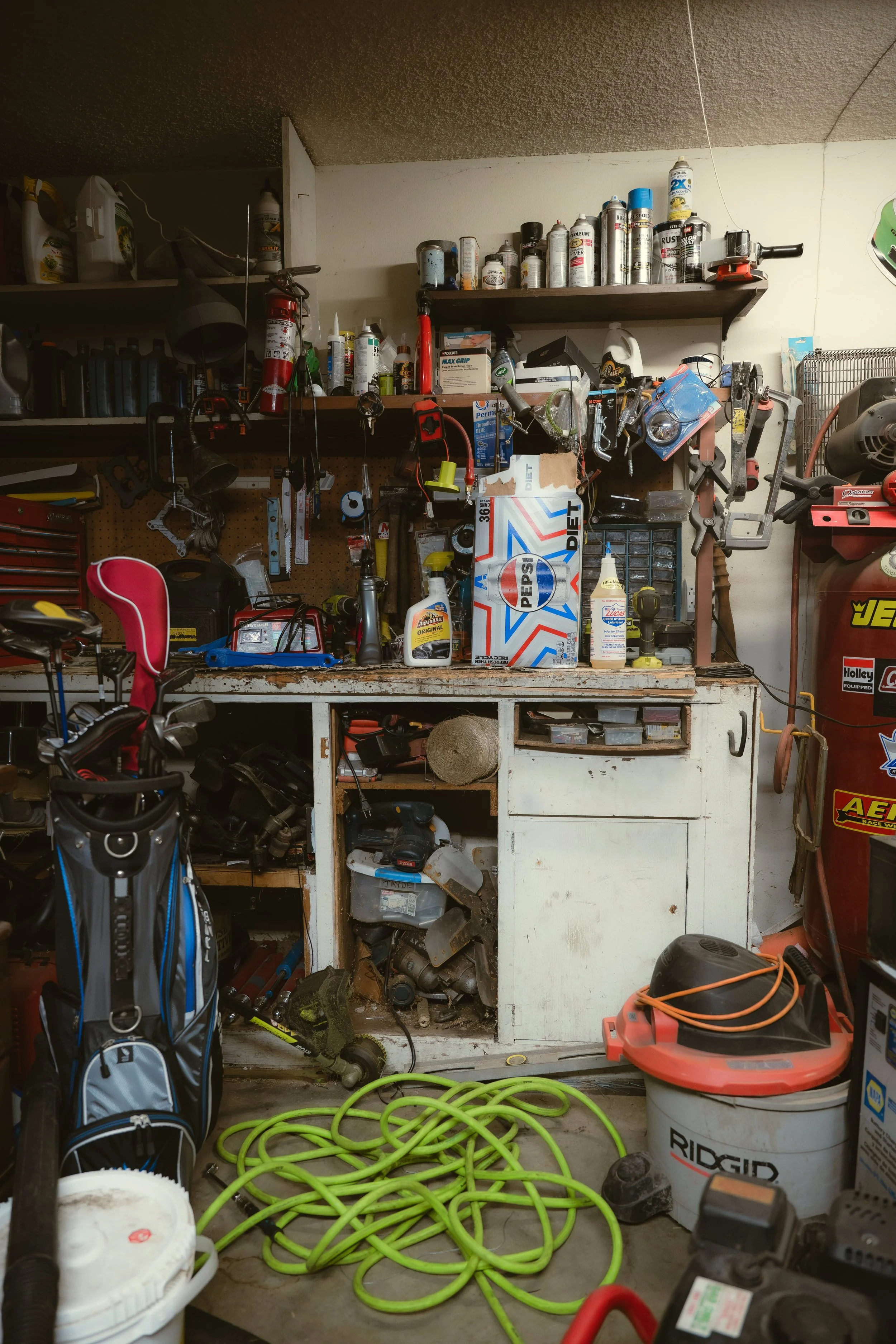
The rest of the garage holds tools, paint, cords, boxes, and objects that almost certainly have a purpose known to someone. It would not perform well in a real-estate listing, but people build and repair things there. They save materials for future projects, and every so often one of those materials turns out to be exactly what was needed, thereby justifying the continued storage of all the others.
There is a difference between disorder created by neglect and disorder created by use. This space is used.
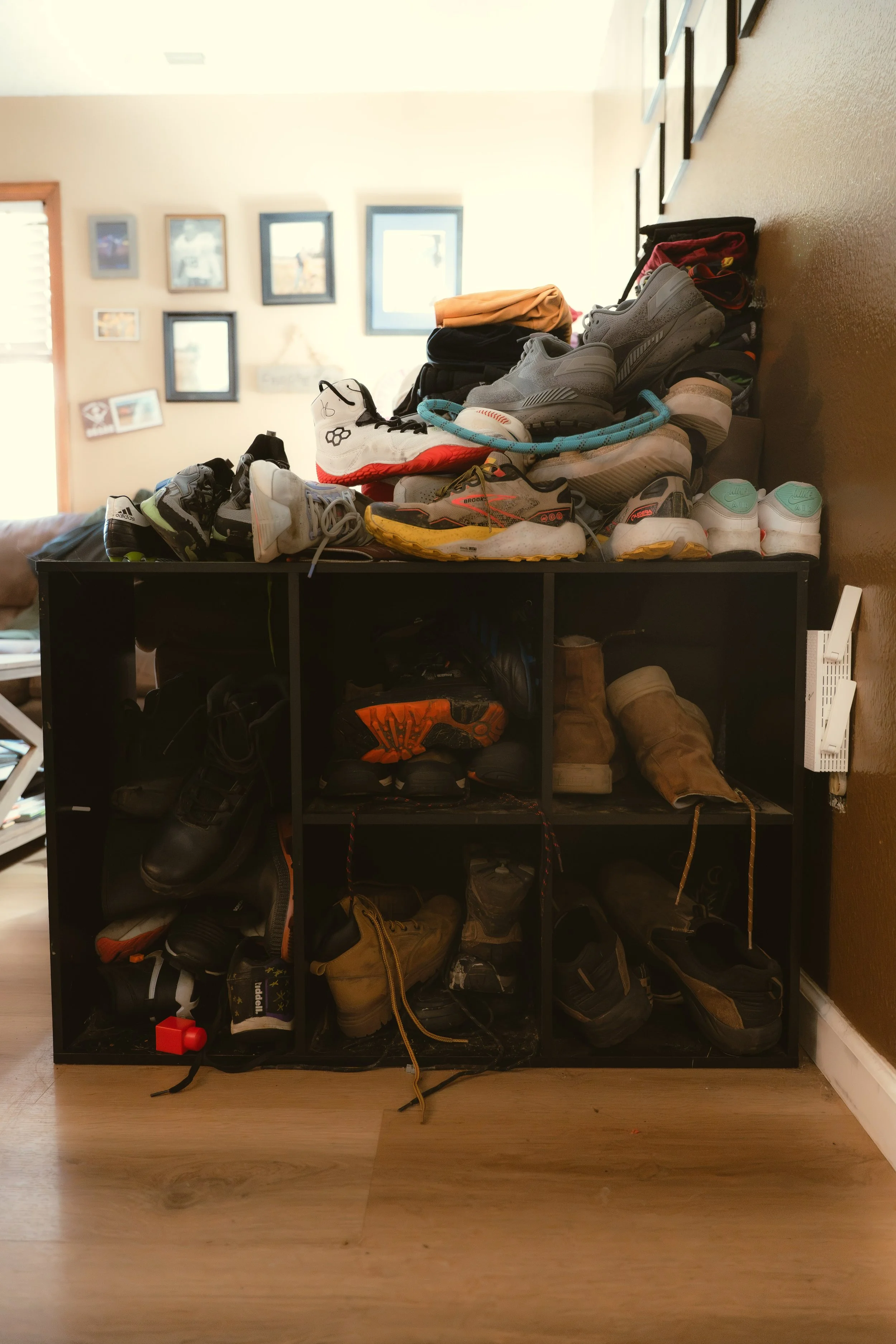
The shoe shelf may be our clearest violation of recommended household capacity. It contains children’s shoes, work boots, running shoes, wrestling shoes, and several individual shoes whose partners have gone missing under unclear circumstances.
It is less an organizational system than a record of movement.
Those shoes go to school, work, practices, grocery stores, wrestling tournaments, family trips, and ordinary afternoons outside. They are what remains at the door when a family has somewhere to go and eventually comes home again.
I will continue asking everyone to put them away properly. Gratitude does not require accepting total footwear anarchy.
The part I am refusing to inherit
My relationship with motherhood has been complicated because I grew up watching motherhood performed publicly and resented privately.
There was church, homeschooling, 4-H, and the visible machinery of a family that appeared involved and wholesome. Beneath that, I heard how miserable my mother was. She talked about living with family while raising three children and watching other women buy houses. The message was that her real life had prevented her from receiving the life she deserved.
Children notice when they are treated as part of the burden.
They notice when their noise is experienced as a personal offense, when their belongings are evidence of failure, and when every sacrifice is carefully recorded. They learn whether home is a place where they are allowed to take up space or a place where they must apologize for having needs.
I am not interested in romanticizing motherhood. Children are loud. They are expensive. They create laundry with the efficiency of a textile mill and can turn a clean room into an active investigation within minutes. I become overstimulated, lose my patience, forget forms, and occasionally consider throwing every unmatched sock directly into the garbage.
My children still deserve to know that I am grateful they are here.
I do not want them growing up with the impression that they stood between me and a better life. I want them to understand that they are part of the life I was trying to reach.
That is where breaking a family pattern becomes less philosophical and more practical. It happens when I stop myself from turning stress into shame. It happens when I apologize after losing my patience instead of insisting that being the parent makes me automatically right. It happens when I acknowledge that our circumstances are difficult without assigning that difficulty to the children.
I am not approaching this work delicately. I am going at it headfirst, occasionally while stepping over a shoe or nearly tripping on a bicycle helmet.
What will remain after the room changes
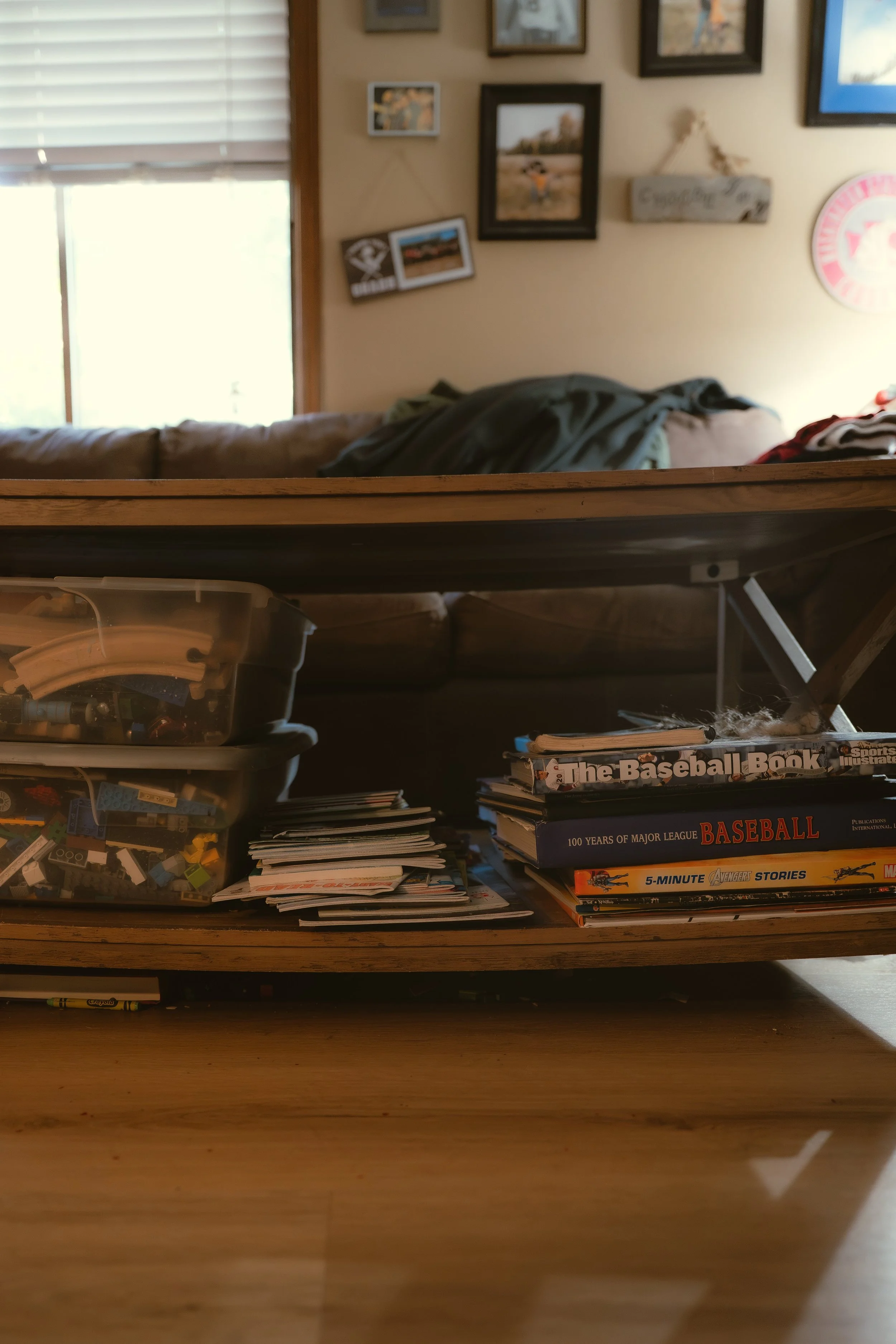
Under our table are LEGO bins, children’s books, handmade papers, and a single yellow crayon lying on the floor. None of it was arranged for the photograph. It is an ordinary corner of the room, which may be why the image means so much to me.
These are the objects that become visual background while you are raising children. You move them, sort them, ask someone to pick them up, and occasionally threaten to donate all of them when no one listens. Their presence feels permanent because they are always underfoot.
It is not permanent.
One day, there will be no LEGO bins beneath the table. The children will stop making piles of paper. Nobody will ask me to read the same book again. The yellow crayon will eventually be picked up, although I am unwilling to make promises concerning the timeline.
I may someday have a clean table with nothing stored underneath it. It will probably look wonderful. I expect I will miss this one.
My children are not cluttering a life that would be better without them. Their shoes, bikes, books, beds, fingerprints, schedules, and laundry are part of the life I fought to build. They live here, they belong here, and they are wanted here.
This basement is temporary, but the way my children feel inside it may follow them for the rest of their lives. They may not remember the dimensions of the rooms or how creatively we interpreted the word “kitchen.” They may forget that their bikes competed with power tools for garage space and that their mother’s office regularly disappeared beneath chargers and coffee cups.
They will remember whether home felt tense because they took up too much room. They will remember whether their needs were treated like interruptions. They will carry some understanding of whether their mother looked at the life around her with resentment or recognized that, even in an unfinished season, there was something worth being grateful for.
I cannot give them a perfect childhood, and I will not pretend to be capable of perfect motherhood. What I can give them is a mother willing to examine what she inherited and decide that it ends with her.
I can refuse to pass resentment down as though it were a family heirloom. I can teach them that an imperfect home can still be safe, that temporary circumstances are not failed circumstances, and that love does not require hiding every sign that people live together.
The photographs can remain neatly arranged on the wall. The laundry will continue spilling out beneath them, and I am learning to be grateful for the whole frame.
